Tuesday, November 24, 2015
Blue Sky Mining (Midnight Oil, 1990)
Considering that I have every Oils album (even the two standalone EP's) from the debut album to Earth and Sun and Moon (1993), the poor band just doesn't get the love it so richly deserves, either in this blog, or even in general.
My Midnight Oil story started when I saw them on Saturday Night Live playing "Truganini" around 1993. It was catchy and it cut through my dominant listening interests of the time, 1960's music and 1980's metal (there wasn't much room for overlap back then). I thought it strange that this kind of music would appeal to me, but after buying and enjoying the album, I started to do the research on what else was out there. This was way pre-Wikipedia (and Internet!), so I generally had to ask friends and I got all sorts of weird answers like they only had two albums, or Red Sails in the Sunset was their first album. I ended up with a very split focus on the band for a while after picking up a second album, Head Injuries, soon after. That one is still one of my favorites and Midnight Oil didn't get much more punk that on that 1979 album. Afterward I filled in the gaps, finding some (10 to 1) better than others (the debut save for "Powderworks"), but overall impressed by the sonic journey the band experienced during the 1980's.
Blue Sky Mining is actually the last album I got. The Bird Noises EP from 1980 was a holdout, but through dumb luck I scored it at a Tower Records going-out-of-business sale. However, by that time I was spread pretty thin, so I wasn't putting much emphasis on completing my Oils collection. As I "discovered" the library for handling my less niche music interests, I realized that Blue Sky Mining was a pretty easy "get", so I finally sealed the deal. It wasn't a totally alien album to me, as I had borrowed it from a friend back in the "boom" days of Midnight Oil. Released almost exactly between 80's magnum opus Diesel and Dust and 90's magnum opus Earth and Sun and Moon, it actually is a pretty straight-up hybrid of the two. The old producer is still on board from the prior album, but a new bass player and new voice is clearly in the mix. Another thing is that this album has a remarkable immediacy to it, perhaps more than any other. Even though I hadn't listened to the album in years, almost every hook, with lyrics (!), was still in my head after years of not hearing them. I think "Shakers and Movers" may be the only song I didn't instantly connect to the hook after giving the dormant album another listen. Not bad! I'm still missing a couple songs that were from an EP (or single?) my cousin lent me: a remix of the quasi-title track that included bits of "Minutes to Midnight" and "Beds are Burning" and a B-side called "You May Not Be Released" that was pretty cool. Oh well, I'm sure some smart person somewhere uploaded it to something and I'll find it one day.
I have to say that the later Oils albums are still pretty much off my radar. Breathe (1996) has always disappointed me since I first spun it on college radio. It's a different producer and just feels a little too smooth. Redneck Wonderland (1998) brings back Warne Livesley (this album's producer!) but it suffers from being too rough. Maybe Goldilocks struck a few years later because Capricornia (2002) sets just the right tone. The band has essentially been defunct since then, which is too bad, because it seemed like they were finally getting back on course. But, especially in the case of singer Peter Garrett, life was intervening and maintaining the band probably wasn't really a priority for anyone anymore. Oh well, perhaps the next of many one-off reunions will change a mind or two and we can eek out one album sometime in this half-done decade!
Tuesday, November 3, 2015
The Christian Tradition 1: The Emergence of the Catholic Tradition 100-600 (Jaroslav Pelikan, 1973)
I'm an absorber. This means that you put me into just about any environment long enough and I'll develop a profound interest in learning what is being taught all around me. Aside from the occasional dabble in reading on historical Jesus and early Christianity, religion hasn't been on my radar until recently as something to read systematically and learn more about. When I mentioned a need to get more familiar with theology to one of the clergy at my church, he recommended Justo Gonzalez and Jaroslav Pelikan. Both men have written multi-volume works on the history of theology from Pentecost to the present day. I read the first volume of Gonzalez earlier this year, so I decided to try on Pelikan for comparison and see which one I liked better. In the end I can't claim a favorite, though I've spoken with many who have a definite preference (usually for the latter). Each author offers something and in the end it's probably more prudent to read both rather than have to choose.From just a quick glance over the book, it's pretty obvious that Pelikan is a certifiable genius. His sheer mastery to harness the words of Scripture and the Church Fathers, as well as just about anything written about either, is on full display in the margins, to support his flowing narrative. Unlike Gonzalez, Pelikan approaches the time period topically, not chronologically. Therefore, there is a lot of jumping around through the time period. It look a little bit of adjustment to wrap my history-oriented brain around this. Additionally, Pelikan assumes you have a decent understanding of the historical background and the major theological terms, so his work is harder for the beginning to digest. Although there were spots where I was lost, overall I'm glad I stuck with it. It was pretty clear though that if Pelikan touched on something that Gonzalez had not in his first volume, it was harder for me to follow, particularly St. Augustine. While Pelikan puts the Bishop of Hippo in his first volume, Gonzalez moved him over to his second volume.
I actually read this a little while ago, so oddly enough the next volume of Gonzalez awaits. As for the next volume of Pelikan, that will likely fall somewhere just inside the new year.
Thursday, October 8, 2015
The Soft Machine (1968)
Just in case you thought this was turning into a classic rock rehash blog, here's one you don't see every day. The Soft Machine, despite initial early promise, never exceeded cult-following status in the States and was probably just too weird for the rest of the world. Nowadays they are considered the keystone band of the "Canterbury Scene", an off-the-beaten-path subgenre of prog rock, but way back around 1967 they were often mentioned in the same breath as much better know (today) bands like the Pink Floyd. They also opened for the Jimi Hendrix Experience during an early American tour, an experience (no pun intended) that would alter the band's direction early on.
The early Soft Machine had two strong band members: Daevid Allen and Kevin Ayers. Due to circumstances I can't fully claim to understand, Allen left the band and formed the Continental-based Gong and all of its myriad related bands. This happened before the first Soft Machine album. Meanwhile, the band forged on, but the Hendrix tour wrecked Ayers to the point of contemplating quitting music altogether. Thanks to a personal appeal from Hendrix himself he would alter course into his own solo career, but still sever his connections with Soft Machine. However, he is present on this album, largely in a bass-playing role. Once Allen had quit, the band veered into a guitarless direction and became one of the very few guitarless trios that predated ELP.
The songs of the first album are undoubtedly weird, but still mostly grounding in 1960's rock. Ayers is the principal songwriter, and, as is solo career would later demonstrate, his tended to bundle his strangeness into groupings, so you get very weird ethereal stuff next to straight-ahead stuff. The "stable" feeling of the first album may also have something to do with the unlikely connection to Animals alumni Chas Chandler and Tom Wilson handling production duties.
The next album, which I found packaged with this one, is much different, with the Ayer-less band under the full sway of Frank Zappa. That fad in turn would give way to instrumental jazz, pushing the band far, far away from the mainstream. Eventually new band members would replace every single original member, giving Soft Machine the rare distinction of shedding its entire original membership (dating back to the first album anyway). Honestly, I've got bigger fish to fry than to try to hunt down the ten or so Soft Machine albums of the 1970's, but certain folks may find a strange appeal in them. For now, best to stick to the first album, and perhaps the early Kevin Ayers solo albums.
By the way, that's the British cover you see above. The American one airbrushed on a bikini. The human form has always been...challenging for us Americans.
Friday, October 2, 2015
Let It Bleed (The Rolling Stones, 1969)
Let It Bleed is the first Rolling Stones studio album I acquired and to this day I still recommend to those discerning to start with this album following some kind of greatest-hits package of the 1960's output. You get a good handful of hit songs - "Midnight Rambler", "You Can't Always Get What You Want", "Gimme Shelter" - plus some surprisingly good sleepers like "Monkey Man" and the first-ever all-Richards vocal outing, "You Got the Silver".
As observed with the Who the other day, the end of the sixties marked a big transitional moment, as the old "British Invasion" bands faded away and a new crop of hard rock bands rose up to take their place. The Stones had followed the familiar pattern of transforming from R&B to psych around 1966-1967, then promptly switching back to basics in the following year. Psych was never really their thing, as evidenced by the ridiculous Their Satanic Majesties Request. Let It Bleed follows right on the heels of the reactionary Beggar's Banquet. It's a musically sophisticated album (not everything was rolled back), but stripped of the ill-advised psych influences that led them astray a couple years back. There's still some nods to the past music, but the path is clearly laid out for what was to come. Rarely does a "transitional" album stand out so well, rather than end up half-baked.
Let It Bleed is also the final album to feature Brian Jones. Admittedly, his contributions were marginalized over the past year. The album was released after his death, but some of the recordings were cut a few months prior, so he's there, just in a very limited capacity. No "Paint It, Black" moments of instrumental genius here. Soon to be Rolling Stone (and ex-Bluesbreaker) Mick Taylor is also on the album, but mostly in a session-man capacity, playing on only a couple songs. Future albums, with Taylor fully on board, would further lead the Stones' sound to a more hard/country blues sound that they would be known for in the early 1970's.
Thursday, October 1, 2015
Who's Next (The Who, 1971)
I won't be the first to say this, but the Who is truly one of the most surprising bands in rock history. I consider them one of the six foundational bands of the British Invasion. The were probably the most mod-influenced of them, and benefited from strong songwriting and musicianship, particularly from the overpowering Entwistle-Moon rhythm section. By 1970, three of the bands (The Beatles, The Animals, and The Yardbirds) were gone. While the Kinks and the Rolling Stones sought refuge in more rootsy territory (albeit in completely different ways), the Who, surprisingly moved comfortably into a new cohort of British hard rockers.
The Who's 1960's output is a lot of fun to listen to, but one gets a sense of a certain unsteadiness, and sometimes a sense of juvenile lyrics, which would hamper their ability to get serious songs like "I Can See for Miles" taken seriously. By 1968 they seemed to be falling behind their contemporaries, but then surprised the world with the "first" "rock opera", Tommy. There were still plenty of goofy-Who moments, but they were more tucked away inside a serious framework crafted by Pete Townshend. Not bad for a group that just the previous year was noodling around with "Magic Bus" and "Call Me Lightning".
Who's Next is decidedly NOT a rock opera, or concept album, though nestled between two of them (Quadrophenia being the other bookend). However its roots are in the failed "Lifehouse" project, and it isn't hard to detect the elements of some kind of unified work throughout the album. Sometimes the lyrics give it away, though most people didn't seem particularly bothered that they didn't know who "Sally" was in "Baba O'Reilly". Most clearly though it a powerful, simple riff that ripples through many of the songs on the album. I can't replicate it here in text but it shows up in most of the songs. Speaking of "powerful", maybe it's because they were coming off the Live at Leeds album (hailed as the loudest performance in rock history), but there is a lot more juice pumping through the album than previous ones. Yet it also has a "cold" feel to it, largely stripped of the old mod sounds and more sequenced keyboard sounds. Even the cover (look closely) has a certain bleakness not characteristic of earlier Who album artwork. This is an album of re-invention by a band that was already back on the upswing.
I'm kind of a latecomer to Who's Next. I've heard most of the songs on classic rock radio, and most of the songs work just fine on their own. I have not heard Townshend's resurrection of Lifehouse, which is such a gargantuan box set I wouldn't even know where to begin. Other than Tommy, in fact, I really didn't feel much motivation to invest in any Who albums until maybe around ten years back, as the greatest hits and regular radio rotation sufficed. The earlier albums have a lot of little surprises and The Who Sell Out was a particularly enjoyable listening experience once I got around to it. I can't say the much colder Who's Next provided me with the same warm fuzzies, but then again it's probably more the result of the album being a victim of its own success. All but two or three of the songs are radio regulars, and those oddballs don't offer much more.
Wednesday, September 30, 2015
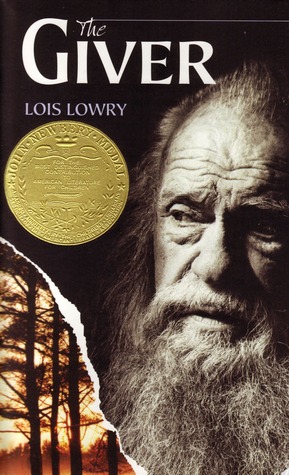
The Giver (Lois Lowry, 1993)
When defining the "classic", one often must apply an arbitrary cutoff date. A book simply cannot be a classic if it hasn't endured a minimally prescribed test of time. My postgrad ongoing classics reading has taken me as far back as 1813's Pride and Prejudice, and, until now, as late as 1989's The Joy Luck Club. I have generally viewed 1990 as a respectable barrier. With The Giver, this barrier has been toppled. Put in perspective as well that the volume of Novels for Students this book appeared in was probably from around 1998, so at the tender age of five this novel was already required reading in schools. While I have kept a mental list of classics I missed because my school was trying to be edgy and different (it was the early 1990's), I can legitimately say I never read The Giver in high school because I had practically graduated by the time it was published.
The Giver has been hailed as one of the first YA dystopias, a now-flourishing genre about hi-tech gladiator-style last-man-standing melees, the moon screwing up the Earth, and people dying from runaway fountain-of-youth treatments. And those are just the ones I've read. The Giver, in a clever move all of its own, present a utopian world so extreme it is actually a horrifying dystopia. In fact, the stunning lack of perception by the characters goes beyond the moral and straight to the physical. I can't say more without wrapping this whole post in spoiler alerts, but Lois Lowry's narrative is confined by what her protagonist can observe. This is why Hollywood didn't pump out a movie before the ink dried on this book. Basically, a scene-for-scene adaption would be totally stupid since Lowry is using the reader's own vision of the world of The Giver, while a movie provides a common visual for all who watch it. Since the movie wasn't universally panned, I suppose they found a way to address this, but not to everyone's satisfaction. I guess I'll just to need to watch (and judge) for myself.
As for my own thoughts on the book, like many, I was confounded by the ending, but unless you are the hero of TNT drama, you probably aren't going to be able to fix an entire broken world. Probably the best feature of the book is the narration itself. We learn as we read just how handicapped Jonas really is because of the utopia/dystopia that has formed him. Undoubtedly the book's intended audience in young adults, so the worldviews are more black and white than equivalent literature for adult readers. If you are under 30, you've probably already read this book already. For the over-30 crowd, enjoy the opportunity to read a young classic without it being force-fed to you.
The Giver has been hailed as one of the first YA dystopias, a now-flourishing genre about hi-tech gladiator-style last-man-standing melees, the moon screwing up the Earth, and people dying from runaway fountain-of-youth treatments. And those are just the ones I've read. The Giver, in a clever move all of its own, present a utopian world so extreme it is actually a horrifying dystopia. In fact, the stunning lack of perception by the characters goes beyond the moral and straight to the physical. I can't say more without wrapping this whole post in spoiler alerts, but Lois Lowry's narrative is confined by what her protagonist can observe. This is why Hollywood didn't pump out a movie before the ink dried on this book. Basically, a scene-for-scene adaption would be totally stupid since Lowry is using the reader's own vision of the world of The Giver, while a movie provides a common visual for all who watch it. Since the movie wasn't universally panned, I suppose they found a way to address this, but not to everyone's satisfaction. I guess I'll just to need to watch (and judge) for myself.
As for my own thoughts on the book, like many, I was confounded by the ending, but unless you are the hero of TNT drama, you probably aren't going to be able to fix an entire broken world. Probably the best feature of the book is the narration itself. We learn as we read just how handicapped Jonas really is because of the utopia/dystopia that has formed him. Undoubtedly the book's intended audience in young adults, so the worldviews are more black and white than equivalent literature for adult readers. If you are under 30, you've probably already read this book already. For the over-30 crowd, enjoy the opportunity to read a young classic without it being force-fed to you.
Tuesday, September 29, 2015
Green Shadows (Fleetwood Mac, 2003)
A couple weeks back I foolishly deleted this album from my library (not intentionally) and had to resurrect it from a backup wisely kept on an external hard drive on another computer. Needless to say this collection isn't exactly Rumours, an album you could probably hit was a stone thrown at random into a field of albums. The whole situation was very much on my mind when it was time to pick the next album of the week, and it was a little weird that it should be this one. I even had to double check to confirm it was random.
I'm not sad about this because early Fleetwood Mac is awesome and this was way overdue. Unfortunately, early Mac is really confusing. First, it doesn't sound anything like the radio-friendly stuff of the late 1970's and early 1980's. In fact, with the exception of "Oh Well (Part 1)" getting the occasional live workout, even the band's most devoted fans have likely heard nothing from this era. Second, the control over the catalog from this era was sloppy at best, so much so that an American release (English Rose) was nothing more than an odd mishmash of material from previous and upcoming British albums. Third, no matter how "tormented" the band was at its commercial peak many years later, this was a band the suffered from serious personnel convulsions that would jettison leaders (Green, Spencer, Kirwan, Welch) with a frequency that would have killed any other band. Of the three, point two is what makes this compilation a little hard to follow.
Green Shadows isn't really a "best of" the Peter Green era; it's more of a rarities collection. Most of the songs are either scratchy demo versions, even scratchier live versions (which may predate the first album - there are no helpful liner notes here), and "un-issued" alternate versions of studio tracks. It covers from (probably) just before the first album to 1970's "Green Manalishi" single and Green's departure from the band. For a period of just under three years it shows a lot of change, from blues covers, to blues-inspired originals, to not-even-that-bluesy originals. Although the band was called "Fleetwood Mac", the public secret was that this was Green's band, named in hopes of landing Fleetwood and McVie for his rhythm section, which he ultimately succeeded in doing. All three, along with slide guitarist Jeremy Spencer, carried serious British blues credentials, though the sound was almost entirely directed by Green and Spencer. Like most of the bands of the British blues boom, they soon started to wander into other musical fields. As Spencer was increasingly marginalized, the band got less bluesy, also fueled by the addition of guitarist Danny Kirwan, who ultimately replaced Green completely. Spencer held on a little longer, but was whisked away into a cult and severed his relationship with the band. Bob Weston and Bob Welch joined later than the scope of this compilation, but they are also a part of the extensive "prehistory" of Fleetwood Mac.
I could go on, but, as you might have noticed, I'm running a little behind schedule here!
Thursday, September 10, 2015
The Federalist Papers (Alexander Hamilton, James Madison & John Jay, 1788)
Without fail, I always manage to find a book each year that totally throws me off my game. Up until July I was well on my way to crushing a nice book-a-week pace, but then history intervened. Well, history and a particularly addictive new app on my phone. Compound this little matter with the fact I'm super busy at work and you can plainly see the blog is suffering. I've come to think of this project as doubling as an exercise in journaling, which, in its own way, keeps me stable, so in spite of Work Mountain on my shoulders, I'm going to try to add a little something each day here and get caught up.Anyway, the Federalist Papers was on my to-read list for a long time, almost as long as it took me to read all 85 articles, complete with the introduction, supplements, and footnotes. While it certainly isn't an easy read, and parts just patently don't hold up anymore, it's something that every American should endeavor to read at least once in their lifetime.
The idea of reading the Federalist came back around 2008 when I read Ron Chernow's door-stopper of a tome on Alexander Hamilton. Hamilton wrote the majority of the articles, though Madison wrote the most influential ones. Jay wrote about five of them, mostly at the very beginning. For what it's worth, the pseudonym "Publius" is essentially Hamilton's creation. As time went on, it was clear that Hamilton stayed most faithful to the philosophy of the work, while Madison, under the sway of Thomas Jefferson, would stray. Jay remained a Federalist, but would be better known as the first Chief Justice of the Supreme Court and a governor of New York, than a major political thinker.
The Federalist is not a blueprint for government, but a commentary (and an opinionated one at that) on the hottest document of the day, the proposed Constitution for the United States. Needless to say, the Constitution went far beyond the original aims of the Constitutional Convention of 1787, not merely "revising" the Article of Confederation, but effectively tossing them out and replacing them with a model of a strong central and national government paralleling that of the state governments. With the American Revolution still fresh on everyone's minds, the notion of creating a strong national government structure was greeting with ample skepticism and much arm-twisting and cajoling was going to be needed to get enough states to ratify the document. One particularly hot battleground was New York, and therefore the perfect place to publish a series of articles defending the new Constitution and debunking the critics.
The articles aren't perfect. One particularly telling section is a dismissal of the need for a Bill of Rights, something that obviously didn't go Publius's way. Also, over time the idea of the Senate being created from appointments by state legislatures fell into disfavor and was ultimately replaced by direct elections under the 17th Amendment. However, in the Federalist, Publius really goes to bat defending the old model, as a way of keeping that body distinct from the House of Representatives. Also the language is slightly archaic, so it's easy to miss some of the points being made if one reads them too quickly. However, that is not a fault of the authors, but more of a caution to prospective readers.
To repeat, if you have the time (allow a month) and an interest in American government, consider taking the plunge and reading the Federalist. Short on time? As an American citizen (or American enthusiast), take it upon yourself to at least read the supplements: The Declaration of Independence, the Articles of Confederation, the Constitution, and the Bill of Rights. You'll be a better person for it, and you will realize how little our current politicians understand American government in this era. Conversely, if you have another month to burn, do what I plan to do in the future: read the so-called Antifederalist Papers, a collection of writings by those opposed to the Constitution. Although branded the "losers" in the history books, a number of their ideas would survive ratification, leading to both good and bad things, like the Bill of Rights and the Civil War respectively.
Monday, August 17, 2015
Smash (The Offspring, 1994)
After playing the connections game the previous week, here we have genuine outlier in the collective. It's not that The Offspring are some kind of obscure band (ha ha), but, as you may have noticed, I don't have a whole heap of punk/hardcore/whatever in the library. Before I forget to mention it though, I did find one tiny link into the fray, through drummer Pete Parada (not on this album), who appeared on a single track on Halford's debut album, Resurrection. So the links are pretty tenuous at best.
A good question is: why do I even have this album? Well, if you're going to have just one Offspring album, this is probably the one. Songs like "Self Esteem" and "Come Out and Play" have worked their way to the foundations of the 1990's music zeitgeist, and I'm pretty sure I inherited this when my sister was purging her CD collection years back. It's still the only album of theirs I own and I credit KROQ for keeping me apprised of their later work, so I really don't feel like I'm missing out on anything as long as I own a radio.
Smash was the band's breakthrough album. I'm a little hesitant to say it was their bestselling album, as I think they topped it at least once in the decade to follow. There are two albums before it (never heard them) and lead guitarist Noodles was on the verge of returning to his original career in school custodial work if this album had failed.
As mentioned previously, it did not. Carried largely on three big hit songs, it propelled the band to the front of a crowded scene of Orange County punk. However, after another recent listening, I don't think it was dumb luck. Although there are a number of stock tricks like hidden tracks and short throwaway bits, it's a musically sharp album, with riffs that get stuck in my head more than I care to admit, especially "Genocide" and "Smash" seem to run through my head. I was going to remark that they seemed pretty ska-resistant, but make it far enough into the album and you'll get some of that, a few years prior to telling us all to get a job.
As seems to be the case with so many of these bands (Bad Religion, I'm looking at you), success turned them against their label, Epitaph, and all future releases were major-label. The band seems to have found a pretty comfortable place in their sound for the past twenty years and only minimal lineup issues (the drummer, of course). While good for their sanity, it doesn't make for great tales of explosive band bust-ups, but sometimes that's just the way things work out!
Friday, August 14, 2015
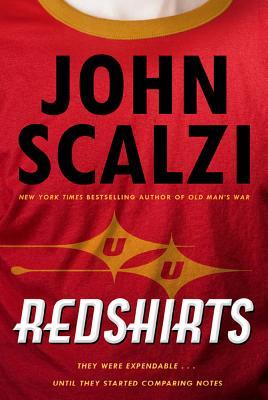
Redshirts (John Scalzi, 2012)
I don't want to write too much here out of concern I might give something away. All I'm going to say, skirting the shoals of spoilers, is that the synopses on Goodreads and the book jacket are deliberately vague and I'm sure most people go into this thinking it's a thinly disguised Star Trek comedy novel. I know I did.Scalzi has the trope dead to rights. For those not aware, the "redshirt" effect is a Star Trek plot device where a group of series regulars plus 1-3 extras in red uniforms go on a mission and the regulars return safely (thereby surviving to participate in future episodes), while the extras are phaser fodder, killed and never discussed ever again. You would think these ensigns/crewmen would start realizing that away missions were hazardous for their health....and so Scalzi goes there.
This book was a really fast read (it only seems like I've been at it for awhile because I've been bad about posting in a timely manner, plus another book kept getting in the way). It's funny and entertaining, and I even dare to say you don't need to be a fan of Star Trek to appreciate the humor, since the characters are also trying to wrap their brains around what is happening to them. At times the meta-humor gets so crazy that the logic of it all is threatened (and what would Spock...I mean...Q'eeng have to say about that?!), but overall it's just a minor issue.
I'm embarrassed to say that I think this book has been on my to-read list since its publication, which means I need to step up the SF reading. Look for more in future posts!
Thursday, August 13, 2015
Fresh Cream (Cream, 1966)
This summer I've been playing the "connections game" in selecting the music I listen to, meaning I start with something, then move on to another album by the same artist, or another group featuring somebody from the previous album. Sometimes it is really easy to shift around, and other times you get stuck somewhere and need to get creative (shared producer, shared song, shared appearance on a compilation, etc.). So, for example, I've meandered from last week's Diary of a Madman as follows:
- Hoochie Coochie Men: Danger: White Men Dancing (Bob Daisley)
- Tony Ashton & Jon Lord: First of the Big Bands (Jon Lord)
- Ashton Gardner & Dyke (Tony Ashton)
- Badger: One Live Badger (Roy Dyke)
- Yes (Tony Kaye)
- Flash: In the Can (Peter Banks)
- Two Side of Peter Banks (Peter Banks)
- King Crimson: Larks' Tongues in Aspic (John Wetton)
- King Crimson: Starless and Bible Black (John Wetton)
- Mogul Thrash (John Wetton)
- Brian Auger's Oblivion Express (Brian Auger)
- Pete Brown & Piblokto: Things May Come And Things May Go But The Art School Of Dance Goes On Forever (Jim Mullen)
- Cream: Fresh Cream (Pete Brown, who co-wrote "I Feel Free")
And there you have it. It's as if Ozzy and Cream are one and the same. Sort of. Or not really. That's the fun of making all of these random connections. And since the album is quite short, I've traipsed on to even further fields: The Baker-Gurvitz Army, The Gun, The Graeme Edge Band, The Moody Blues, Ray Thomas, The Ian Gillan Band, Roxy Music, and Hard Stuff. I'm sure Atomic Rooster is just around the corner.
Back to Fresh Cream, though, it's one of those iconic albums you will likely find in any decent collection of classic rock. In fact, if you want to embark on your own game of connections, I can't think of a much better place to start. If you work from the roots you can go back to the Graham Bond Organisation, the Yardbirds, or John Mayall. That's enough to send listeners in all directions, but for an even greater adventure, try going forward! (see below)
Although iconic, Fresh Cream is also one of the most timid albums recorded by the trio that invented the power trio. They were far more in their element on the stage than in the studio. Side one is their original work (with the exception of "Spoonful"), while side two is all covers (with the exception of "Toad"). All but three of the songs ("Dreaming", "Cat's Squirrel", "Four Until Late") would be released in live form on later albums, most of them far longer in duration, with "Sweet Wine" and "Spoonful" crossing the 15-minute mark. Obviously squishing down these songs to the 2-3 minute range and jam-free sort of saps them of their mojo. Then again, if the iconic "Cream Jam" isn't your thing, this may actually be a good thing. Compared to later albums, you can still detect a whiff of mod in the work, soon to be washed over by the next album's psych leanings. Jack Bruce in particular arrives with the much musical chops, followed by Ginger Baker, who would redefine rock drumming until the onset of Led Zeppelin. While Eric Clapton is hardly a slouch compared to these two, his main contribution to this album is keeping it partially anchored in the blues. On this album he is fresh out of John Mayall's Bluesbreaks boot camp, which broke him out of the de-bluesing trend of the Yardbirds, but didn't give him a lot of tools in the singing and writing departments, which is largely left to Jack Bruce here. Not to worry, Clapton-maniacs, he manages to partly resolve this shortcomings just one album later. Problems aside, he was the best-known of the trio, so just his name alone put Cream head-and-shoulders above the competition.
Cream was one of the most combustible outfits around, lasting barely two years. While the combined talents of Bruce, Baker, and Clapton provided a lot of early gains, being in a band where every man was a leader proved to be a disastrous concept. Even before their formation, Bruce and Baker were just one heartbeat away from an open fistfight. The later albums would exhibit increasing disjointedness and the collapse resulted from Clapton finally giving up on his bandmates and Bruce and Baker being legally forbidden from killing each other. Of the three post-Cream careers, Clapton's is the best documented (Baker initially in tow), mingling with the more celebrity-level musicians. Jack Bruce is a little more down-and-dirty in his associations, largely affiliating with mid-level names like Robin Trower and Mountain. Ginger Baker enjoyed the most diverse career path of the three, initially following a similar path to Bruce, but in later decades appearing in strange places, like Hawkwind and Masters of Reality (!). So, to return to the original point here, you can go a million different directions when you start playing musical connections from Cream. Try it out and see where you end up!
(Ugh, I meant to post this sooner and just forgot to publish. Still on track! Wish I could say the same with my reading....)
Thursday, July 30, 2015
Diary of a Madman (Ozzy Osbourne, 1981)
This album, along with Blizzard of Ozz (1980), comprise the Randy Rhoads era and are probably the best albums in the Ozzy Osbourne catalog, though both were impacted by controversy when remastered in 2002. The problem was they weren't so much remastered as rerecorded. The original bass and drums, played by the respectable musicians Bob Daisley and Lee Kerslake respectively, were erased and rerecorded with members of Ozzy's current band. Rhoads and Osbourne were left as is. Even more confusing were the original credits of bass, drums, and keyboards to Rudy Sarzo, Tommy Aldridge, and Don Airey, none of who played on the album. Once again, the problem goes back to the root of Daisley and Kerslake's never-ending battle with reality TV star Sharon Osbourne, who in 1981 was happy to de-credit them from the album (Sarzo and Aldridge did in fact join the band, but not until the tour; Don Airey left the band earlier and the keyboard duties went to a guy named Johnny Cook), and then she completely obliterated them in 2002. I'm still not 100% sure which version of Diary of a Madman I am actually listening to, so I just tell myself it's the original and don't give a single thought to Bordin and Trujillo's involvement. If anyone can find something that provides a direct comparison, I would be very appreciative. I've listened to a vinyl rip and the opening drums of "Over the Mountain" sound identical to what I have, so I'm assuming this is the Daisley/Kerslake original. Either that or the replacement rhythm section really outdid themselves on playing exactly the same, which goes back to the original question: "Why did she do it?"
Let us leave this unhappy controversy behind us. All in all, Diary of a Madman is a solid album, and it kills me to say that, probably thanks to better marketing and publicity, it has the edge over what Ozzy's old band was up to around this time. "Over the Mountain" and the title track, which bookend the tracklist, are undeniable classics. Even the second tier material like "Flying High Again" and "Believer" is quite strong, and I can forgive the sappier stuff like "Little Dolls" and "Tonight". Even though "S.A.T.O" is Sharon's initials, it's a frantic little number that is almost a re-imagining of the old Sabbath song "Spiral Architect". Although I don't really associate keyboards with metal, they punch in at just the right spots, highly synthetic yet appropriate for the music is supports. In fact, I'm a little bummed that it isn't Don Airey playing because that guy has some serious hard rock credentials. He was a part of the "Great British Metal Shuffle of 1979", which saw Ozzy go solo, Dio join Sabbath, and Don Airey switch from supporting Sabbath on Never Say Die to being a full member of Rainbow. In fact, his Rainbow duties around this time are what kept him from assisting on this album, although he found the time to contribute to the previous album.
As indicated, the musician lineup playing on this album was effectively DOA upon the release of the album. Lee Kerslake was fired and never returned, electing to rejoin his old band, Uriah Heep. Although also fired, Bob Daisley, for a guy that seems to cause the Osbournes (mostly you-know-who) so much agony, would contribute to most of Ozzy's albums through 1991's No More Tears. The reason? The little public secret that Ozzy couldn't write an album's worth of lyrics to save his life. The fate of Randy Rhoads, of course, is no secret, and his ghost still lingers over every subsequent Ozzy album. I'm hardly an Ozzy fanatic, in case you haven't learned that yet, so I can't really offer much insight on the later albums. Some are good, others not so much. His career has never been on a steady trajectory in either direction. No doubt his inability to kick the rock star lifestyle at an "advanced" age, as documented in the film God Bless Ozzy Osbourne as well as accounts of the recording of the Black Sabbath album 13, are primarily responsible for this.
Tuesday, July 21, 2015
Wingspan: History (Paul McCartney/Wings, 2001)
I'm just going to come right out and say that nobody really needs to invest in either disc of Wingspan, neither the Hits, nor the History. It's not a bad collection of songs, but it doesn't break any new ground in the Paul McCartney catalog unless you count the throwaway "Bip Bop/Hey Diddle", an inferior lo-fi acoustic medley of two adequate album tracks. Then there's the "playout mix" of "No More Lonely Nights", which is completely unnecessary unless you are abnormally fascinated with the original song.
So what the heck was the Wingspan project? If memory serves me right, it was a "songtrack" for a half-baked documentary on the years from the first McCartney solo album to around the mid-1980's. I originally thought it was highlights from the period between McCartney and McCartney II and the ten-or-so albums in-between, credited variously to "Paul & Linda McCartney", "Paul McCartney & Wings", and even just "Wings" (which is why Apple created the "Album Artist" field so it doesn't wreak havoc with your iPod). However there is some spillover into the "Macca" years with Columbia, so there's no way to neatly describe the scope. It's a interesting period for Paul, who went from Beatle exile to submerging himself in another band identity, but then re-asserting his fame and eventually inflating into a commercial juggernaut. Although it's easy to call the earlier music more earnest than the later stuff, I always find something likable in every McCartney song, even the most gushy AM-radio grade stuff.
Probably due to lack of patience, I broke the set into its two main parts, so here we focus on the History disc (the second one). With a name as big as McCartney, even the "deep tracks" are fairly familiar to most people, though these are certainly not the A-listers. For example, tracks from Band On the Run for Hits would be stuff like "Jet" and the title track, while this disc takes on "Let Me Roll It", "Helen Wheels", and "Bluebird". McCartney, probably by virtue of being a pretty "raw document" in itself, gets 5 tracks, more than any other album, though "The Lovely Linda" is a puff piece and "Maybe I'm Amazed" really deserves to be with the Hits disc. Ram (co-credited to Linda) comes in with three tracks (four if you count the "Bip Bop" medley), making the pre-Wings era very well represented here. Nine of the tracks are Wings era proper, which can mean a lot of things, as the lineup was fairly fluid, but rest assured you get your Denny Laine fix no matter what album. The lackluster Red Rose Speedway and the most hits-heavy Wings at the Speed of Sound are not represented, but otherwise it's a pretty even spread. Finally, the "new" solo era gets a tiny bit of love, with four tracks over three albums, though I'm reluctantly counting the "No More Lonely Nights" remix as a part of Give My Regards to Broad Street.
Basically if you invest in McCartney, Ram, and Band on the Run, you aren't missing anything major here, though I have a soft spot for "Rockestra". Those three albums give you half the tracks here right away. Also, many of the tracks are in their "single edit" form, so listeners may find songs like "Rock Show" a little too truncated for their tastes.
Thursday, July 16, 2015
Speak No Evil (Wayne Shorter, 1964)
Jazz has taken a (completely random!) vacation from the blog, so dialing up Wayne Shorter proved to be a nice change of pace this week. Although this is the only album of his I have with his name at the top, I've been combing through the archives to familiarize myself with his other work.
Outside this album, most of what I've known about Shorter is that he was in the second great Miles Davis Quintet and some related Davis album, and was a founding member of Weather Report. In my recent attempt to scoop up the greatest 100 or so jazz albums, Speak No Evil, probably Shorter's best-known work as a leader, joined my collective.
This album was recorded right around the time Shorter joined the Davis quintet and along for the ride are his quintet friends Herbie Hancock and Ron Carter. Since Miles wasn't doing a lot of sideman gigs in the 1960's, Freddie Hubbard joins here on trumpet, while Elvin Jones handles drums (on loan from Trane, I suppose). Tony Williams was probably having too much fun messing around with weirdos like Dolphy and Andrew Hill to make an appearance.
As for the music, far be it from me to play the role of super-critic, but it's a little bit on the frosty side. Musically, it is far removed from Shorter's hard bop beginnings, but doesn't really give any indication of where Shorter would ultimately be in just a few short years. While there is a fair measure of freedom in the solos, it's within a pretty tight structure, with all of the pieces sporting clear beginnings and endings, hardly free jazz territory of later work. Maybe it's just the titles, but they seem to be drawn from nightmares: "Dance Cadaverous" and "Witch Hunt" in particular.
As is the case with all of the quintet members except Carter (who had no albums of his own during this period), the album was released on Blue Note. Lately I've found it interesting how a smaller, more "pure" jazz label handle the sidemen projects, while Davis was comfortably with the larger, yet not as jazz-inclined Columbia.
Fun fact: Until 2004, this album enjoyed the rare distinction of sporting all still-living musicians. RIP Elvin Jones and Freddie Hubbard!
Tuesday, July 14, 2015
Taken at the Flood (Robin Waterfield, 2014)
This is another entry in the excellent Ancient Warfare and Civilizations series from Oxford. This is Waterfield's second book for the series, following up on 2011's inaugural volume, Dividing the Spoils. Maybe I just wasn't paying attention before, but he is now listed as a co-editor of the series, currently at six volumes (all different authors). Here's to many more!As for this particular book, it covers a period of time that frequently gets overshadowed by the Punic Wars on one side and the end of the Roman Republic on the other (and don't worry, this series has got those covered - stay tuned!). Working largely from the narratives of Livy and Polybius, Waterfield walks readers through the Roman conquest of Greece from the end of the third century BC(E) to the mid-second century. The Romans went from hesitant interlopers to crushing conquerors in a breathtakingly short period of time. Just like in much of Greek history, almost no player was a constant friend or enemy of Rome in a world a rapidly shifting alliances. It is probably the most dynamic period of Roman history, when a mid-sized Italian republic transformed into a Mediterranean superpower, knocking out virtually all of the Hellenistic successor kingdoms save Egypt in less than a century. Oh, and that whole Carthage thing got resolved as well.
Waterfield's view of Roman power isn't shared by everyone. In the introduction he open identifies with the belief that Rome's success was built by its culture of extreme violence. This violence, which fueled its armies, was completely overpowering to a Greek world unused to the concept of total war. Waterfield hints that this violence, which stoked military prowess and rampant conquest, would ultimately overpower the sadly insufficient mechanisms of government that drove the Roman Republic. However, the figures that would bring about the demise of the Republic has not yet burst on to the scene (Marius was just a child at the sacking of Corinth and Sulla not yet born), but their role models, men like Flamininus, the Scipios, and Mummius, were very much driving forces in these events. You'll be hearing a lot more about the imperial transitioning of Rome in future book posts here.
Monday, July 13, 2015
Christ Actually (James Carroll, 2014)
Between Zealot, How Jesus Became God, and now Christ Actually, I'm not sure I initially intended to read so much on the same topic over the past year. Each author, however, has a different background. Reza Aslan is a ex-evangelical Christian and current Muslim, Bart Ehrman is an ex-evangelical Christian and current agnostic and New Testament scholar, and James Carroll is an ex-Roman Catholic priest and current reform-minded Catholic. The lives of each of these three men had an impact on the tone and focus of each book.Carroll has ruffled more than a few feathers in the past with his book Constantine's Sword, which shows the intimate relationship of anti-Semitism and the Catholic Church. In many ways, this book is a continuation of that discussion. Mid-twentieth century atrocities (Hiroshima, the Holocaust) that ushered in the "Secular Age" have forced Christianity to come to grips with its troubled history with Judaism. Carroll identifies the breaking point between Church and Synagogue as the Jewish Wars, a serious of Roman-Jewish conflicts in the first two centuries (AD/BCE - depending on how you roll). The Gospels were written during this cataclysmic backdrop of war and genocide and each Gospel is flavored by the events of the time. Carroll puts particular focus on Mark, which sometimes gets buried alongside Matthew and Luke under the cover of "synoptic". Carroll shows the far more apocalyptic tone of Mark compared to the others, and, as the earliest of the four Gospels, its closeness to Jesus as a Jew. Mark was also written nearly at the same time of the destruction of the second Temple, and surely this was on the Gospel author's mind. Out of a survival instinct the early Christians (the "Jesus People") distanced themselves from the other Jews and fell into the orbit of Rome.
There's a lot of strong medicine in this book and it's probably not the most comfortable read for those not ready to face the uncompromising nastiness of war. When we read "the city was sacked" in a history textbook, it is an antiseptic line covering up all the atrocities of rape, murder, and destruction. We nearly take for granted now that soldiers draw a salary, but back in the day plunder was their compensation, a devastating and humiliating punishment for the losers. However, for those concerned about how Christianity can continue in the present day, especially in the face of an overwhelmingly secular society, this makes for stimulating reading.
Thursday, July 9, 2015
Counterpoints (Argent, 1975)
Looking back on some previous posts, I realize I've covered the Argent catalog quite well up to this point. After this post, all that will remain is the second album, Ring of Hands, and the second-to-last one, Circus. There's also the live album, Encore. Of the three, I only have the first one, so the Argent era of this blog may be drawing to an end soon!
So....Counterpoints. Well, until relatively recently, I wasn't even aware that the band had released two albums following the departure of Russ Ballard, this one and Circus, both from 1975. Losing a band member responsible for writing half of the material on paper should have been a killing blow to the band, but then again the band is called Argent, not Ballard, so it really isn't a huge surprise that the band continued with two new members, John Verity (guitar/vocals) and John Grimaldi (guitar). Another major change, more behind the scenes, was the end of Rod Argent's writing partnership with Chris White, his old Zombie bandmate. I'm not sure if anything negative caused that, but White was becoming more involved with A&R stuff rather than songwriting anyway. On Circus, Rod handles all of the writing except for one track penned by bassist Jim Rodford. Counterpoints is similarly written, but Grimaldi gets a couple songs of his own into the mix.
Since Rodford and Argent shared vocal duties with Ballard on almost all of the previous albums, the vocals on Counterpoints are not drastically different from the "classic" era. Verity, most prominent on the opener, "On My Feet Again", "Time" and "Rock and Roll Show" actually sounds Ballard-esque. Musically, some of it isn't a big departure from albums past, but Grimaldi's "It's Fallen Off" (great title?), the bridge of "Time", and "I Can't Remember But Yes" feature some crazy Mahavishnu Orchestra-grade jazz fusion style, showing that the band pushing past simple prog territory. I have no doubt the new members fueled this development, particularly Grimaldi, who, unlike Ballard, could focus entirely on guitar and let the others handle the singing. There are also some quasi-confirmed rumors that drummer Bob Henrit played very little or nothing on this album due to illness, forcing the band to borrow some guy from Genesis to...ahem...hold down the beat.
Finally, there's the little matter of the availability of this album. For some reason, Circus received a proper CD release as a two-fer with some earlier album (I can't remember which, but it was probably one of the first two), but Counterpoints did not. Furthermore, Circus is readily available as download, whereas Counterpoints is not. Thankfully, some kind people have been uploading various tracks to a popular video streaming website and it isn't too hard to make clever use of various extensions to build your own album. However the quality is typically pretty wretched and I'm sure some of what I found is missing small parts here and there. But, if you're not an OCD audiophile and you just want to hear the final Argent album, there are ways to achieve this. Songs come and go, but the one "must hear" track is Rodford's "Time". In general, the songs on the first half of the album are better, though "Butterfly" is also an excellent track, making good use of either trumpet or trumpet-sounding keyboard.
If you really want a challenge, try finding yourself a full copy of Rod Argent's solo debut, Moving Home, released three years later.
Tuesday, June 30, 2015
Good to Great (Jim Collins, 2001)
Back in my retail days, when I was impervious to long hours and low pay, Good to Great was one of a number of business titles I read in my quest for superior inventory management techniques. As I wrapped up grad school and got out of management, I lost interest in reading them and at times I felt outright hostile to Good to Great. After all a book that extols the virtues of Fannie Mae (corruption) and Circuit City (bankruptcy) must have missed the mark.Much to my surprise as I returned to a leadership role in my career, I found that people still recommended this book. So, with a measure of trepidation, I returned to Jim Collins's masterwork. I have to say, although it takes some brain power to disassociate a number of distasteful events that affected the "good-to-great" companies, the principles distilled from his thorough research still resonate strongly. Overall, the trick is to work from the inside out, starting with "Level 5 leadership", then getting the right people on board, before working on the one great concept you're passionate about and can be the best at (the "hedgehog concept").
I've been long aware that this book is a "prequel" of sorts to Collins's earlier book Built to Last. He connects concepts between the two books at the end and I think I'll need to go back and read that one to fully grasp some of the points. Also, I think some brain power will be necessary to translate the stories of successful publicly-traded for-profit companies to a library environment. It's not easy, but I know the connections are there.
As an amusing aside, the touting of "hedgehog" puts Collins in direct contrast with an earlier book I read this year, The Signal and the Noise by Nate Silver. In that book, Silver advocates for the "fox" instead. However, he was advising this for aspiring political pundits, not business leaders, so take that whichever way you like!
Sunday, June 28, 2015
Sabotage (Black Sabbath, 1975)
Reviewing some of the past Black Sabbath posts here, it looks like I've already tipped by hand regarding my thoughts on Sabotage, so I'll try not to be too repetitive. Although it is typically regarded by Ozzy purists as the last "great" album by the band, it's probably better to describe the album as a gateway of what was to come from the band.
Sabotage retains a number of musical elements that were expressed to their fullest on 1973's Sabbath Bloody Sabbath, particularly in emphasizing riffs over solos. On the other hand, the band was now on the other side of a rather introverted period for the band with very little activity beyond their appearance at the 1974 California Jam (oddly notable for showing Iommi minus the mustache). They were beat down pretty hard during this time, mostly in the legal department. At the same time, they were continuing to seek a somewhat new musical identity and it pops up in places here.
The red meat for the purists here are "Hole in the Sky", "Megalomania", and the first chunk of "Symptom of the Universe". In fact I remember walking back into the stockroom during my bookstore days and hearing "Symptom" going full-bore and the employee just standing there having his mind blown. No doubt it's a really hard charging song, but overall not the direction the band was heading. The evidence is in the second part, introduced in the studio, softer and acoustic and everything the first part wasn't. Lest anyone doubt this part appeared later, witness the live version (originally from Live at Last, then made official on Past Lives) that abruptly ends after the first part.
Moments like this, along with instrumental bits like the acoustic "Don't Start (Too Late)" and the choral workout "Supertzar" show this is a band not intent on revisiting the old days of Paranoid. The synthesizers are ramped up as well, particularly on the album's second side in songs like "The Thrill of It All" and the overtly commercial "Am I Going Insane (Radio)". To be clear, the latter is not a "radio edit", but instead the greatest case of a British band messing with their American fans since Zeppelin's "D'yer Mak'er", as "Radio" is rhyming slang for crazy (crazy=mental=radio rental). Finally, "The Writ", a rare song that features lyrics by Ozzy (Geezer was the usual lyricist for the band and I can only guess putting Ozzy in the credits was an act of generosity), brings everything together, a heavy, solo-less mini-epic polemic on the band's legal woes. Depending on your version of the album, the fadeout of the monster riff brings things to a close, or a little ditty by Ozzy and Bill Ward called "Blow on a Jug" appears after the fade, a rare moment of sheer whimsy on a Sabbath album.
For the continuing saga of Sabbath, you can continue on to Technical Ecstasy. If you like to read about bands going off the rails, it makes for some gripping reading!
Saturday, June 27, 2015
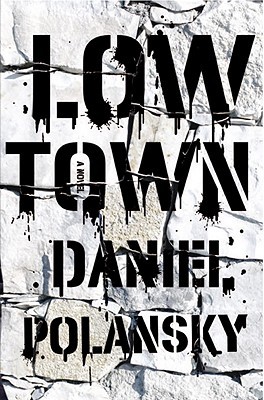
Low Town (Daniel Polansky, 2011)
It's surprising that nobody has thought of putting a classic noir story in a fantasy setting. Or maybe somebody already did and I just never heard about it until now.
Low Town (British title: The Straight Razor Cure) is a smart mashup of the two genres. As many other readers have noted, it's not a stretch to completely lift the main story out of its fantasy setting and into the worlds of Dashiel Hammett or Raymond Chandler. In fact, this is the main liability of the novel: the fantasy world at times doesn't hold up particularly well. In particular, a visit to a corrupt noble's home feels like the Warden (our nameless hero) walked into a mid-20th century estate in the nice part of town.Although Daniel Polansky is an American author, he seems to have lost his
American publisher. Therefore, the remaining two books in the series are UK-only titles, and his new series (a duology, I think) is also not available in the United States. But, it's a small world after all, so I'm sure this won't prove an overly cumbersome barrier to being able to read these books sometime down the road.
Subscribe to:
Posts (Atom)