Friday, May 30, 2014
Don't Mess With the Dragon (Ozomatli, 2007)
Ozomatli is certainly an outlier among the artists featured here. I originally stumbled on them during my college radio days; their first album was released in 1998 and somehow made it all the way out to Maine. Unlike the bands here that have earned the coveted/dreaded "lost bands of the 1990's" tag, Ozomatli managed to be at the right place at the right time, transforming from a local, minor-label group in Southern California into a national major-label sensation.
I never managed to obtain a copy of the first album, for all the spinning I did. However, by a pure fluke, I casually mentioned this is an old colleague and a week later a burned copy of this album showed up in my mailbox. Although I think the band hasn't managed to release two consecutive albums on the same label, Don't Mess With the Dragon reminds me a lot of the debut album. Since the band attempts to fuse about five distinct musical styles, not every track will appeal to everyone (not to mention how to tag this post), but it's clear why this band continues to stay strong.
Thursday, May 29, 2014
Volunteers (Jefferson Airplane, 1969)
Back in January, when Jefferson Airplane Takes Off was the randomly selected album of the day, I lamented the relative lack of Airplane in my library. Luckily, being the Bay Area, the public libraries are well-stocked with classic era Jefferson Airplane, so this album, along with Crown of Creation, joined my collective.
Although Volunteers isn't nearly as iconic as Surrealistic Pillow, it's clear that the band was driving toward a heavier sound between the two. In fact, the disassociation from folk-rock combined with exposure to increasingly violent realities like Altamont, were the forces that ultimately drove Marty Balin and Spencer Dryden to cash out and leave the band. Nevertheless, for modern listeners who might find the first two albums to be a little too mellow, Volunteers fills that need for more hard-rocking material. For the purists, there is still enough folk/country to go around ("Good Shepherd", "The Farm"). I think the key struggle for Jefferson Airplane was that it was just plain hard to manage six different personalities. On top of that, the band was often placed in the weird position of being the performance outlet for aspiring writers like David Crosby and Frank Zappa.
Regardless, Volunteers is an important part of the San Francisco music scene, though perhaps a bookend of sorts. Not only was the world changing, but the band would also undergone considerable changes in the next couple years before finally calling it a day...then transforming into something a little more cosmic sounding!
Live at the Avalon (The Oxford Circle, 1966)
Most people have never heard of this band. Hell, I hadn't either until about 10 years ago, and that was from following the breadcrumbs from Blue Cheer, another band that isn't exactly universally known. Until this concert saw the light of day, the only officially released output from the band was the single "Foolish Woman" which would occasionally pop up on local psych/garage comps.
From this document it is clear the band deserved a little more than this. Their set is a smart array of blues and British Invasion covers intermingled with compelling original material. It is a good strategy for any band trying to escape a "bar band" image, but not entirely lose their audience with originals that nobody has ever heard.
What is really interesting about this band is the number of interesting careers it launched. Drummer Paul Whaley, and later frontman/guitarist Gary Yoder, would later play in Blue Cheer, though neither at the same time. Jim Keylor would produce/engineer for the Dead Kennedys much later. Finally, the guy playing organ on the unreleased second single, "Troubles", would probably top everybody. You might even have heard of the name Mac Rebennack, a.k.a. Dr. John!
Blues enthusiasts will appreciate that a very young Joe Louis Walker briefly joined the band when guitarist Dehner Patten was in the slammer, although he doesn't appear on this album.
Wednesday, May 28, 2014
Sad Wings of Destiny (Judas Priest, 1976)
Arguably their best album, Sad Wings of Destiny, Judas Priest's second album, is a study in contradictions. It is both sophisticated and primitive. My gut reaction has generally been toward the former, but after some repeated listenings of its successor, Sin After Sin, it is remarkable that the band was able to produce a relatively complicated album with relatively unsophisticated technology. Their previous album, Rocka Rolla, used such a shoestring technique that it was effectively performed "live in the studio". Sad Wings doesn't quite take things that far, but the drums thud and the overdubbed vocals are a little shaky. Both matters were remedied on the following album, with a new producer (Roger Glover) and label (CBS) and drummer (Simon Phillips). But it's really hard to say bad things about Sad Wings because it is such a freaking cool album, considering it was 1976. Priest was in full NWOBHM mode (a scene they would largely abandon three albums later). Rob Halford is especially in unusual form, singing a lot of low notes, but folded into plenty of screaming sections (look no further than "Victim of Changes"). Do I detect a little bit of Queen and David Bowie in the vocal delivery? Glenn Tipton contributes to the gloominess as well with more piano than you would ever expect to hear on a Judas Priest album.
By the 1980's this was sort of the "great forgotten album" but the band always had a special affection for it. It plays a major role in their 2005 reunion album Angel of Retribution, a sort of parallel/modern-day Sad Wings of Destiny. If you like the more straight-ahead power metal stuff like British Steel, this album may seem a little overly mellow or complicated, but it is an essential part of a band with a very extensive and influential history, good enough to let even the harshest critic forgive some of their later career moves (primarily the 1990's).
The Rutles (1978)
It's the Pre-Fab Four! The Rutles are easy to dismiss as a glorified Beatles parody-tribute band for those who only watched the TV movie or just read the liner notes. However, the "soundtrack" album is a display of the pure genius of Neil Innes (a.k.a. the Seventh Python) and his ability to not merely mimic, but mashup and rearrange the Beatles sound.
For the uninitiated, the Rutles were the brainchild of Monty Python alum Eric Idle and largely bankrolled through Saturday Night Live cash, resulting in a fairly tepid mockumentary (many years later followed by an even worse "sequel"). The movie Rutles had a discography that was a fairly straight parody of Beatles albums (e.g. A Hard Day's Rut, Sgt. Rutter's Only Darts Club Band, and so forth). A little ho-hum to say the least. However the soundtrack Rutles (which omit Eric Idle and include veteran Ollie Halsall, though the mock credits of Nasty/McQuickly/O'Hara/Wom remained) deliver a series of songs that often cannot be pinned to one single Beatles song.
The strength of the album lies mainly in the beginning tracks. In fact, "Goose Step Mama", a ridiculous send-up of the Hamburg/Liverpool era Beatles frequently ended up on Beatles bootlegs. The best track of the entire album, "Hold My Hand" soon follows. Long before Love mashed up the original Beatles tracks, Neil Innes somehow managed to mash/parody the following in one track: "All My Loving" "She Love You" "I Want to Hold Your Hand" and "Eight Days a Week".
Many of the early tracks spin at least three different songs together. More direct parodies like "Get Up and Go" (for "Get Back") appear toward the end. A much later Rutles album, Archaeology, would more effectively tinker with the later Beatles sound and is a strongly recommended companion to this album. In fact, I got the two albums at the same time and it worked out pretty well!
Tuesday, May 27, 2014
Hold On [Running] (Trapeze, 1979)
Trapeze was a great band, but unfortunate its legacy rests in being a living organ donor to other bands. Hold On (also released as Running with family-unfriendly album artwork) was the final studio release before the patient finally expired on the operating table.
Trapeze was a five-piece prog rock band turned power trio, turned jam band. For some reason they were always a big draw in Texas. At the risk of sounding like I'm stealing a Chuck Norris joke, they were so big in Texas in the early 1970's that ZZ Top opened for them. However, as stated before, the legacy of Trapeze rests in the exploits of its members in other bands. By the time of Hold On, Glenn Hughes was long gone, in and out of Deep Purple. Following the demise of Purple, Trapeze attempted to reunite its classic lineup, which didn't work out and alienated second guitarist Rob Kendrick who established a rival Trapeze to take advantage of the insatiable Texas scene. Resolving to move away from the "jam band" image of the past couple albums and polish up the vocals, remaining members Mel Galley and Dave Holland brought aboard singer Pete Goalby and restored Pete Wright as bass player (who apparently was good-natured enough not to mind that he had been temporarily ousted by Glenn's brief return). The new emphasis would be on songwriting instead of jamming.
There's plenty of jamming to go around on Hold On, but Goalby clearly brought more discipline to a band that had lost a bit of focus in the previous two albums. Also, Goalby brought back a more compelling vocal range. Galley had been managing the vocals since Glenn's departure, but he was far more of a guitarist than a singer, so he was probably relieved to share the spotlight. It looked like Trapeze was ready for another new era.
However, the new era was cut short with the sudden departure of Dave Holland to Judas Priest, where he handled the drums for the next ten years, during their most lucrative era. Following the live album Dead Armadillos, Goalby was next to go, claimed by Uriah Heep. By around 1982, "Trapeze" was just Mel Galley and a handful of unknowns. Mel followed suit in the mid-1980's and joined Whitesnake, more content to work in the shadow of David Coverdale's increasingly successful band than be the captain of his own sinking ship. Alas, his stint in Whitesnake was cut short by a senseless injury that all but destroyed his career. Interestingly, his brother Tom Galley was the mastermind of the 1980's turbo-charged Phenomena projects.
These days getting the various Trapeze albums is easier than ever thanks to being in the domain of mp3-friendly labels. However many of the albums, even the classics like Medusa, have been in label limbo for far too long. I think I picked this album up in the UK before it got a proper US release many years later. For the curious, I recommend sticking to the first three albums before venturing further.
The X Factor (Iron Maiden, 1995)
When you are a metal band, generally the grim, messed-up problems of the world are a frequent lyrical topic, usually accompanied by very grim music. Welcome then, to the Grimmest Album, Iron Maiden's 71-minute dirge, The X Factor.
The X Factor is the perfect storm in a generally miserable chapter of the band's extensive history. Everybody knew in 1994 that the band would be changing following the departure of the iconic frontman Bruce Dickinson. In fact, my friend and I were openly speculating that Paul Di'Anno would return to the band (which is hindsight was a ridiculous notion). A lot of others were listing off their preferred all-star vocalists, such as Michael Kiske (plausible) or David Coverdale (not likely!). So basically everyone was disappointed when the role was given to Blaze Bayley of Wolfsbane. It was like replacing Luciano Pavarotti with Derek Zoolander.
All right, maybe that's a little harsh. The truth was there was a lot more going on than a change of singer. Behind the scenes, producer Martin Birch had retired, leaving the band a little confused about where to turn for expect production guidance. Also, Steve Harris, bassist and founder, was seizing the reins more tightly than ever, especially in writing and production. In fact, a mere three songs on the last six albums have not listed him as co-author or solo author. Normally not something in itself to worry about, seeing that during the 1980's his name was on almost all of their most iconic songs, but life was a little rough for Steve, weathering a lot of personal issues. This ended up being expressed in some of the most lyrically dark areas the band ever dared venture into, most notably "Blood on the World's Hands" in which he seems utterly resigned to the horrors of the world and wondering how anyone, especially children, could endure them.
The rest of the band seems a little wooden as well, with the drums and guitars stuck in a bit of metal-by-numbers, but also working in an uncomfortable structure of slow, quiet beginnings and ends surrounding lumbering, ponderous songs. In fact, only Blaze, who is probably still shocked by his unexpected rise from obscurity, is really giving it his all. It seems a shame that the one time he really shines (this album), the rest of the band seems to be wallowing in a thick fog of depression. He would squander this opportunity on the next album, Virtual XI, featuring a somewhat re-invigorated band, but a hopelessly wooden vocalist.
Friday, May 23, 2014
A Canticle for Leibowitz (Walter M. Miller, Jr., 1960)
The intersection of science fiction and theology is rich with potential, and Walter M. Miller, Jr. was one of the first to explore it in his only novel released in his lifetime, A Canticle for Leibowitz.
Classic Western history texts always dutifully explain how the Church guided Europe through the "Dark Ages" following the collapse of the Roman Empire. Although studies have poked an increasing number of holes in this simple explanation, the endurance of the Church through politically turbulent times is one of the more noteworthy success stories in history. Miller, writing during some of the frostiest moments of the Cold War, speculates how the Church would continue in the aftermath of a global nuclear disaster and resultant second "Dark Age". Miller explores matters such as how alien our culture might seem to a future culture that has willingly divorced itself from scientific progress. How do secular and religious thinking work together (or against each other) to restore modernity? Would we been doomed to repeat the Dark Ages again and again and how many of these cycles could institutions such as the Church endure? Furthermore, in all of these big questions, Miller is also able to examine issues such as euthanasia, deformities, and the role of religion in interstellar travel. There is no shortage of debate throughout the book.
Two novels clearly influenced by this book are The Sparrow by Mary Doria Russell and Anathem by Neal Stephenson. Each book related to a different aspect of this novel. In the case of the former, it is the concrete notion of the continuation of the Church into the future and the implication of going beyond Earth. Stephenson doesn't use the Church itself in his model, but instead examines the relationship between an educated, cloistered community and the wavering secular society over vast stretches of time. I highly recommend either of these books, especially if you are intrigued by A Canticle for Leibowitz.
A couple quibbles. The first is not Miller's fault, but simply the common problem of speculative fiction, which is not knowing then what we know now. In this case the Second Vatican Council is the key difference here, so we have a Church in (what used to be) North America that functions primarily on Latin. The other issue is more structural in nature. The three sections take place in different time periods, each far removed from the others chronologically, which can be very disorientating to the reader. Generally this strategy is employed in the larger multi-generational type novels, like James Michener's books. This is a shorter work, so Miller doesn't have much luxury to build a world before moving on to the next stage.
Blues Obituary (The Groundhogs, 1969)
The Groundhogs are back, in a much more bluesy vein, but watch out for that second word: obituary. This album is sort of the band's farewell to their blues era and an introduction to a new sound. Although one of the purer acts of the British blues boom, even taking their name from a John Lee Hooker song, they quickly expanded out of the strictly blues sphere. Most of the songs here still fit comfortably in a blues-rock vocabulary, though signs of what was to come are apparent on the final track. The next album, Thank Christ for the Bomb, would flip the script entirely.
After 1974's Solid, the group would temporarily disband, then reform with a new lineup under the leadership of Tony McPhee. Pretty much everything released after that should be considered McPhee's quasi-solo career.
I acquired all of my Groundhogs albums from a friend a few years back, though Split has been a glaring omission in need of correction...and soon!
Thursday, May 22, 2014
Carolina County Ball [L.A. 59] (Elf, 1974)
If all you know about Ronnie James Dio is stuff like "Stargazer", "Heaven and Hell", "Holy Diver", etc., the Elf albums can be a bit of a shock. At the time of this album's release, Ronnie had been recording for about 15 years, mostly for obscure labels around New York state. The early 60's stuff is mostly derivative and even if you are diehard Dio fan you can probably live very comfortably without ever hearing the stuff. However, around 1967, things began to click, starting with the release of the high-energy single "Hey Look Me Over/It Pays to Advertise" credited to a "new" band called the Electric Elves. Even suffering the loss of guitarist Nick Pantas in a car crash around that time didn't steer the band off its trajectory toward heavier material, illustrated by unreleased gems like "Driftin'" and "The Rape of Andre Lucia". While this stuff was light years removed from the days when Ronnie belted out "I Left My Heart In San Francisco" at a pizza parlor in Cortland, it doesn't really predict that Ronald Padavona would be the "Voice of Metal" ten years down the road.
This middle ground is sort of where we're at by the time Carolina County Ball (released overseas under the name of the 2nd track, "L.A. 59" - see artwork below) was recorded. The music is certainly heavy, but not in Black Sabbath territory. They had just endured the departure of guitarist David Feinstein, Dio's cousin, who had been on the forefront of making Elf into a heavier band. Also, this is the first album where Dio is no longer playing bass. Additionally, pianist Mickey Lee Soule is given co-credit with Dio for all songs. Also, Ronald Padavona has gone back to his stage name of Ronnie Dio. So there were some substantial changes afoot with the release of this album. New guitarist Steve Edwards and bassist Craig Gruber carry on the Elf tradition admirably. Mickey Lee Soule and drummer Gary Driscoll are also in top form here. What's interesting is how these performances don't carry through well to Rainbow. In Soule's case he was forced into non-piano keyboard for nearly every track (compare here, where he is 100% honky tonk piano), and Driscoll I guess just had the misfortune to be Ritchie's drummer in the short window between Ian Paice and Cozy Powell.
I originally picked this up in England as part of a two-in-one set called "Ronnie Dio: The Elf Albums" which combines this album with Trying to Burn the Sun, released the following year. Many have remarked that these albums, in spite of sporting virtually the same personnel, are better than Rainbow's first album. I tend to agree, as they are playing to the strengths of the different band members and not trying to fill mere slots in Blackmore's solo adventure.
For those interested in Ronnie Dio's pre-Rainbow days, check out http://www.padavona.com which has a treasure trove of data from this era, including almost all of the early recordings.
Fused (Tony Iommi, 2005)
There is some confusion over how exactly to credit this album. I've seen Tony Iommi/Glenn Hughes, Glenn Hughes/Tony Iommi, just Tony Iommi, and finally just plain Iommi. As Glenn was in the middle of a veritable career renaissance (see Soul Mover) and Tony was largely stuck in the Black Sabbath "reunion" era, I tipped the scales to him.
Fused has the distinction of being the Hughes/Iommi collaboration that actually worked. Their first time around (see Seventh Star) under the "Black Sabbath Featuring Tony Iommi" banner resulted in a decent studio album followed by a disastrous tour, resulting in Hughes getting sacked after just a few shows. As Black Sabbath disintegrated in the wake of increasingly irrelevant albums like Cross Purposes and Forbidden, Iommi attempted to launch an actual solo career with a cleaned-up Hughes handling bass and vocal duties, but that was iced for eight years thanks to the "reunion" era beginning shortly after it was recorded, followed by a re-imagined solo debut with guest stars just called Iommi. And when the 1996 DEP Sessions finally received a proper release (it has been circulating as the bootleg Eighth Star) it was substantially reworked, with new drums tracks and at least one missing song.
When Fused was released the following year, it was almost an embarrassment of riches for Sabbath/Purple fans still fresh from hearing the other solo work released the prior year. Although technically and consistently strong (in spite of the hovering presence of Bob Marlette, who has a knack for appearing alongside artists that far outclass him), Fused doesn't quite stick in the mind like the other albums. It's not an album that take risks. Glenn sounds like Glenn and Tony sounds like Tony. The opener "Dopamine" is a bit misleading and different in tone then the rest of the album, which takes a darker approach, appropriately reaching it's peak in the final track, the epic 10-minute "I Go Insane".
Far contrasting their rocky relationship in the 1980's, Hughes and Iommi have continued to maintain cordial relations, with Tony even inviting Glenn into Heaven and Hell to fill in for some final shows following the death of Ronnie James Dio. Tony has continued to work closely with assorted Deep Purple family members, even teaming up with Ian Gillan a couple times for one-off stuff like Gillan's Inn and the Who Cares charity album. Of course all of this attention more recently has been on Black Sabbath's 13, but that's just the way things work when you put Ozzy into the equation. Meanwhile, Glenn has iced his solo career to work in band contexts such as Black Country Communion, and, more recently, it's quasi-spinoff group California Breed.
Tuesday, May 20, 2014
The Dead and the Gone (Susan Beth Pfeffer, 2008)
The problem with reading in series (and it seems like everything freakin' book suddenly morphs into a trilogy or worse) is that you end up reading sub-standard books just for the sake of finding out what happens. Admittedly, I've done worse than troop on from Life As We Knew It to this book, but the second time around was pretty disappointing. First of all, this was not a sequel, but more of a "companion" book, taking place concurrently to its predecessor. Also it seems a little factually weird. I mean, who am I to say what would actually happen if the moon got closer to the Earth and messed everything up, but everything seemed a little off. The ancient Catholic priest seemed like a walking cliche, but for some reason did weird things like go to birthday parties.
Since I'm a total completionista, I will continue to the next one. These books read pretty fast, if nothing else. There's even a fourth one, but the reviews have been pretty harsh. At least we'll finally get some forward momentum in the chronology and not have to live the initial disaster over yet again.
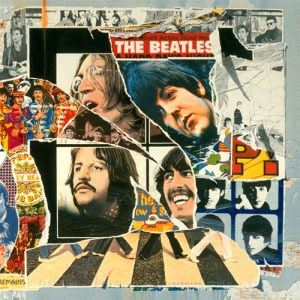
Anthology 3 (The Beatles, 1996)
Yesterday I invoked Anthology 1 as a worthwhile comparison listening experience to A Hard Day's Night, so it's an easy segue into Anthology 3, an under-the-hood look at the final albums the Beatles recorded. The third set is dominated by alternative (usually embryonic versions) of canon songs, with a few unreleased numbers and a handful of ironic oldies thrown in for good measure. It's a more raw document than the previous Anthology, which is not really all that surprising given the back-to-basics posturing the band adopted in the post-India era.
The Beatles songbook is about as close to scriptural canon as rock music can get, so it's pretty jarring to hear versions of what could have been, and to think about how fine a line separates what is very familiar from what was locked away for nearly 30 years. By this time, I think the Beatles themselves were catching on that pretty much anything of theirs that made it on an album would be instantly seared into the history of music and were more than happy to test the limits with avant-garde, nonsense lyrics, general silliness, and few sneaky bits of self-referential material ("Glass Onion"). At the same time, the band was clearly disintegrating as a single performing unit and I am certainly not the first to note that The White Album and its successors sound more like a patchwork of four solo careers than the work of a unified band.
Some stray observations:
- A few of the arrangements here are either enhancements or equivalents of their canonized final versions. "While My Guitar Gently Weeps" here is an acoustic arrangement with an added verse, "Ob-La-Di Ob-La-Da" has a totally different rhythm and horn section, and "Honey Pie" is downright jaunty.
- You can pretty much throw everything you know about what was recorded when, with particular focus on the de-medley-ed "Mean Mr. Mustard" et. al. and early recordings of songs that would end up distinguishing the formal launch of solo careers ("All Things Must Pass", "Junk")
- Makaveli (er....Tupac Shakur) knocked Anthology 3 out of the top spot on the Billboard 200 with The Don Killuminati: The 7 Day Theory. And just like that the 1990's were back!
Monday, May 19, 2014
A Hard Day's Night (The Beatles, 1964)
No hidden gem featured today! The movie and album A Hard Day's Night remains the perfect snapshot of Beatlemania, a phenomenon that has yet to be repeated, and indeed may never be repeated, in the history of rock. After listening to a substantial amount of solo McCartney, Lennon, and Harrison (sorry, Ringo), it is a reaffirmation of the greatness of the Beatles hearing them all working together in their heyday.
Incidentally, today's listen comes from the "Beatles in Mono" box, which in the case of this album, doesn't really make a whole heap of difference. However later albums would sport noticeable differences and are worth checking out! Recently the U.S. versions of the early Beatles albums received proper CD releases, which for most of these albums meant glorified playlists, but I believe the U.S. version of this album also includes the "incidental" soundtrack music, whereas the U.K. version features non-soundtrack songs, many of them substantial hits in their own right. And while I'm on a tear, I also encourage you to check out the corresponding songs from this album on Anthology 1, which (if you can get around the dropped lines and errors) often have compelling alternative musical arrangements.
Sunday, May 18, 2014
Come On In (R. L. Burnside, 1998)
How many people get their big break at age 72? Although he had been recorded as early at the 1960's, R. L. Burnside didn't get much serious exposure until the 1990's and even then all of those recordings were firmly rooted in the blues. The Deep Blues documentary helped Burnside and his peers like Junior Kimbrough appear on the radar and attracted the attention of white rock artists like Jon Spencer. So it was a bit of a shock when this pure vein of Mississippi blues got the remix treatment with this album and suddenly Burnside was among the MTV crowd.
I was right on the front lines, doing the college radio gig, when this album hit, and probably like many was thinking "holy $#!t they remixed this old guy?" I hadn't even heard the original material being remixed other than "Come On In" itself, which reappears into completely different forms later in the album (and "Just Like a Woman" appears here too largely unaltered). It wasn't until hearing Burnside on Burnside, the live album released a few years later, that I really saw what was going on here on this album. As far as the studio goes, Burnside never went back to anything traditional, with two more heavily produced albums released before his death in 2005. I can see the points of the purists that Burnside left the blues faith with this album, but all in all, this is always fun to listen to. Burnside's legacy continues on, for good or ill, through the proselytizing of hipster favorites the Black Keys and the ilk (and the movie Black Snake Moan cuts very close too) but I've been more interested to hear what his two latter-day bandmates, grandson Cedric Burnside, and adopted son Kenny Brown, have been up to these days.
Ritchie Blackmore's Rainbow (1975)
It's been four years and a day since Ronnie James Dio succumbed to cancer, so I was particularly happy to dial up the album that really raised his profile, Ritchie Blackmore's Rainbow. To numerous listeners of the time, Dio was probably seen as an unknown quantity, with all eyes on Blackmore in his first proper solo outing. However the real veteran was actually Dio, who's earliest recordings actually predated Blackmore's by about three years. Before he was the voice of metal, Ronnie Dio (Blackmore added the "James") fronted various upstate New York bands like The Red Caps, The Prophets, The Electric Elves, The Elves, and finally just plain Elf. Everything prior to 1972 is officially out of print, but, thanks to the power of the Internet, readily available as free downloads. Through sheer luck, Elf was discovered by Roger Glover and Ian Paice of Deep Purple and quickly signed to their Purple label and released three albums with Glover in the booth.
Meanwhile, another Deep Purple alum, Blackmore, was toying with leaving the band and recorded a song, borrowing Elf (minus their guitarist) to back him up. A song lead to an album and an album lead to a band, all in 1975. In fact, things were moving so fast that this album and the final Elf album, Trying to Burn the Sun, were released at virtually the same time. Although the two albums have virtually the same personnel, they sound very different. While the Elf album is a capstone achievement for a band that suffered for far too long in obscurity, this album is much more unsteady, with songs primarily designed to showcase Ritchie's guitar playing ("Self Portrait" and "Snake Charmer" are thin constructions around Blackmore's guitar lines). Songs like "Man on the Silver Mountain" and "Sixteenth Century Greensleeves" were early hits for the band, but it was another band, also called Rainbow, that would make these songs huge stage numbers.
A band notorious for not holding the same lineup for two consecutive albums, the Elf-Rainbow lineup of this album rapidly disintegrated in the wake of this album's release. Blackmore moved quickly to replace the Elf members that were playing out of their element, leaving only Dio. In their place arrived a crack team of professional musicians, including top drummer Cozy Powell and the framework for their most successful album, Rising, was in place. This new lineup would also breathe new life into the songs on this album. When one hears the live versions of songs from this album it becomes abundantly clear why Elf was not equipped to handle the greater ambitions of Ritchie Blackmore.
Saturday, May 17, 2014
Rushmore Soundtrack (Various Artists, 1999)
Just like the movie itself, it's hard to simply pigeonhole the Rushmore soundtrack in terms of approach and style. This disc does double duty with incidental music by Mark Mothersbaugh (Devo) and a distinctively quirky mix of songs, primarily 1960's and British. Supposedly director Wes Anderson wanted to do an all-Kinks soundtrack, but something took him off that path. Even still, the first four songs (by the Creation, Unit 4+2, Chad & Jeremy, and the Kinks) don't seem to indicate he veered all that far from his initial soundtrack plan. Even Cat Stevens (the only artist to get two tracks) isn't that far a stretch). Suddenly, with a little jazz from Zoot Sims and a little French from Yves Montand, it's not all that predictable. When the songs return to British rock, it's solo-era John Lennon and the Faces, a successor scene to the earlier tracks.
Unlike the other soundtracks (in name or fact) featured here, this is a rare and sterling example of a soundtrack and film combination that I really enjoy. This was definitely one of the finer freebies I picked up during my retail days.
Thursday, May 15, 2014
Universal (Bim Skala Bim, 1997)
Ska is back with a vengeance this week, something to be embraced while reveling in the randomness. I was sort of on the fence about putting Bim Skala Bim in my "lost bands" category, but, although they enjoyed a much more sustained career than most of this category, I ended up bestowing the tag because their recording patterns in the 21st century were very much in line with the others in this category.
Among the third-wave ska bands, BSB isn't exactly obscure, but the further you get from Boston, the less likely you are to find their fans. I remember being a freshman in college and wondering why people were wetting themselves over the fact they were going to play a show at Colby (NB: Colby is about 1/3 Massachusetts-resident students). So sue this poor California boy who only had a faint notion of ska in the California style. Needless to say, I did enough time in college radio that BSB was unavoidable. In 1998 I devoted a fair amount of airplay to their B-sides collection The One That Got Away, which endeared me to their promoters who placed Universal in my hot little hands. What I didn't know then was that BSB was a nearly-spent force with only one more album left in them. Along with most of the third-wave ska groups they were effectively moribund in the 21st century. It has come to my attention though that a reunion album came out last year (no real surprise to a long-time classic rock fan that reunion albums are virtually inevitable).
Before I leave BSB (for good...or until I pick up another album anyway), I must posit my theory about the origins of the 3rd Wave. I think in the 1980's a huge glut of horn players came out of the schools, cast in the glory of mandatory school bands. Aspiring punk bands were looking to differentiate themselves and adopted these horn sections, just waiting around for a band, and transformed into ska and swing bands. Of course, the school band programs died in droves in the 1990's and by 2000 or so there was no fresh blood in the scene and it withered as the older bands aged away. This is my theory. Take it or leave it.
Labels:
Bim Skala Bim,
lost bands from the 1990's,
music
Wednesday, May 14, 2014
De Stijl (The White Stripes, 2000)
I've already talked myself silly about the White Stripes, so not a whole lot more to add. I've noticed their even numbered albums tend to be a cut above their odd numbered albums, which would certainly make this one of the good ones. I unintentionally avoided the first two albums for some time, but have since made amends and my studio album collection is finally complete, at least until some kind of reunion takes place.
As for De Stijl itself, it's a slicker production that their self-titled debut, but hasn't yet overreached into the extra instrumentation that would characterize their later releases. Going back to my even/odd theory, it's a spiritual predecessor of sorts to my personal favorite, Elephant.
Looks like the second Jack White solo album is due out next month. Pretty exciting!
Flaming Pie (Paul McCartney, 1997)
Paul McCartney has been getting a little extra love these days here on Revel in the Randomness. Flaming Pie was considered a comeback of sorts for Paul and the influence of the recent Anthology projects with George and Ringo shows prominently.
The two big hits from the album, "The World Tonight" and "Young Boy", are among Paul's best solo work. I remember hearing them in my last few days of study in London and feeling like I was witnessing the restoration of a legend. Even their appearance in a crappy Gerard Depardieu movie doesn't diminish them. Some of the other tracks (I'm looking at you, "Beautiful Night") bear the trademark WTF McCartney lyrics, but the album is so strong musically, courtesy of good friends like Jeff Lynne, Steve Miller, and Ringo Starr, that I can give Paul a pass.
Of course, the years to come were hard on the former Beatles, with George being attacked in his own home and Paul losing Linda to cancer. In Paul's case the upheaval caused yet another change of musical direction, first with the therapeutic souped-up oldies album Run Devil Run, followed by a new direction from Driving Rain onward, that didn't really carry the spirit of this album, yet didn't fall back into his old ways either. Although the standards album a few years back had me scratching my head, Paul continues to be a reliable and steady music creator.
Subscribe to:
Posts (Atom)